GalacTicTacToe
GalacTicTacToe is a polished Unity project built to explore clean game flow, responsive UI design, AI-driven gameplay, and cross-platform presentation. The aim was to create a simple concept with a stronger level of visual polish, technical structure, and product clarity than a standard tic-tac-toe clone.
Project Overview
Goals
This project was designed as more than a simple playable game. It was also a way to demonstrate development discipline through structure, iteration, presentation, and polish.
Build a clean playable experience
The project needed to feel complete, readable, and accessible rather than experimental or unfinished.
Show strong UI thinking
A major goal was creating a clearer and more responsive interface using Unity UI Toolkit.
Introduce AI gameplay depth
Multiple difficulty levels helped move the project beyond a basic local-only experience.
Deliver cross-platform presentation
The project was built and tested with both browser and Android delivery in mind.
Key Features
Player vs Player and Player vs AI
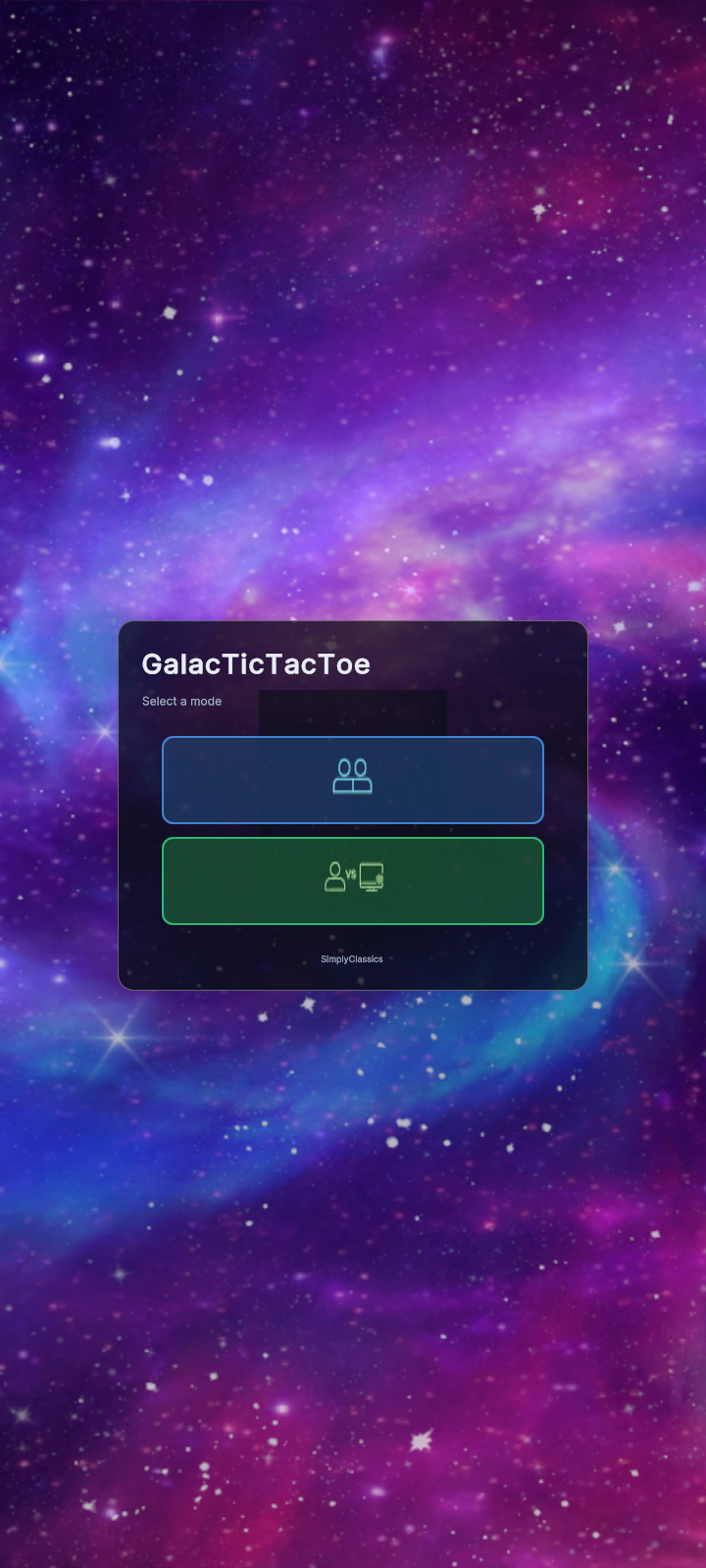
The game supports both local two-player matches and AI-driven gameplay for solo play.
AI Difficulty Selection
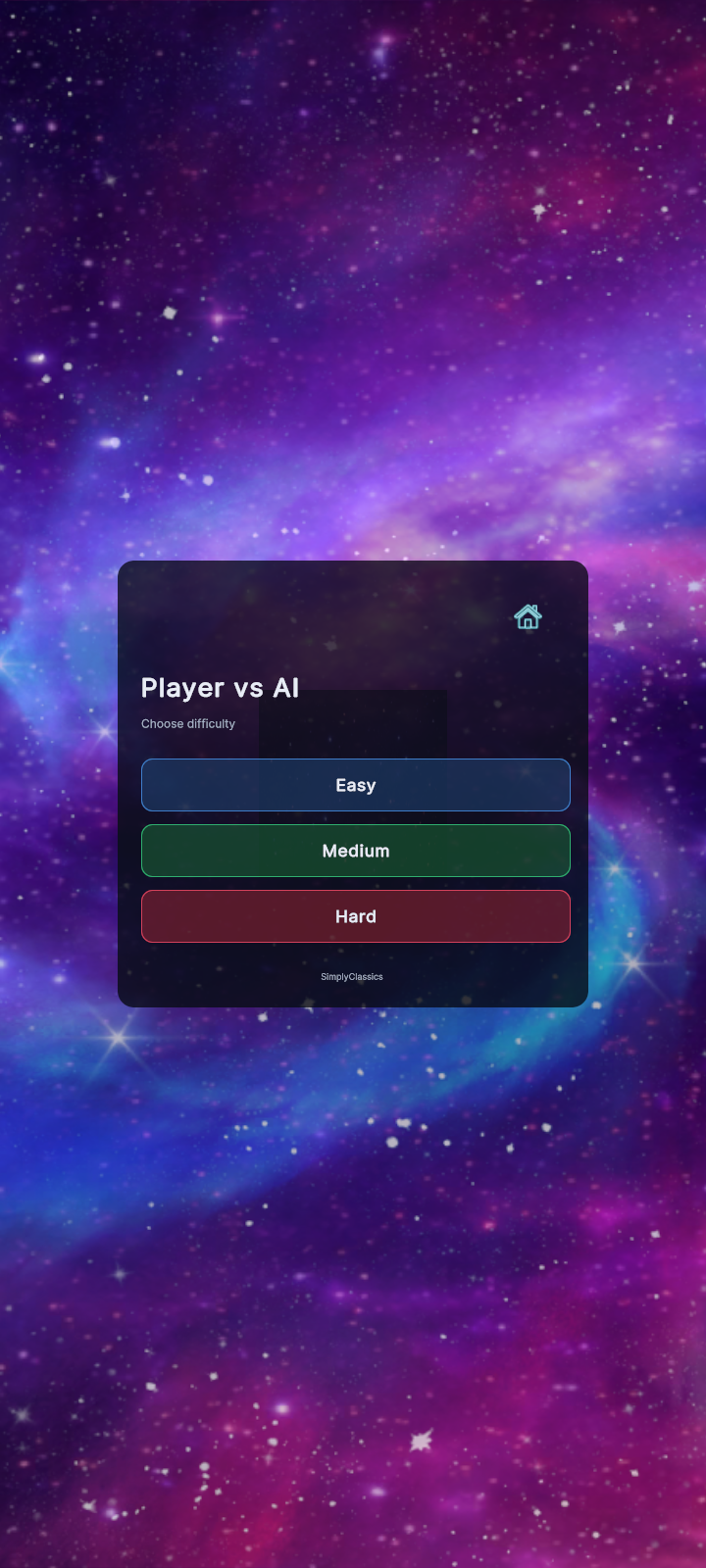
Separate difficulty levels create a more structured experience and help demonstrate different gameplay behaviours.
Responsive UI Layout
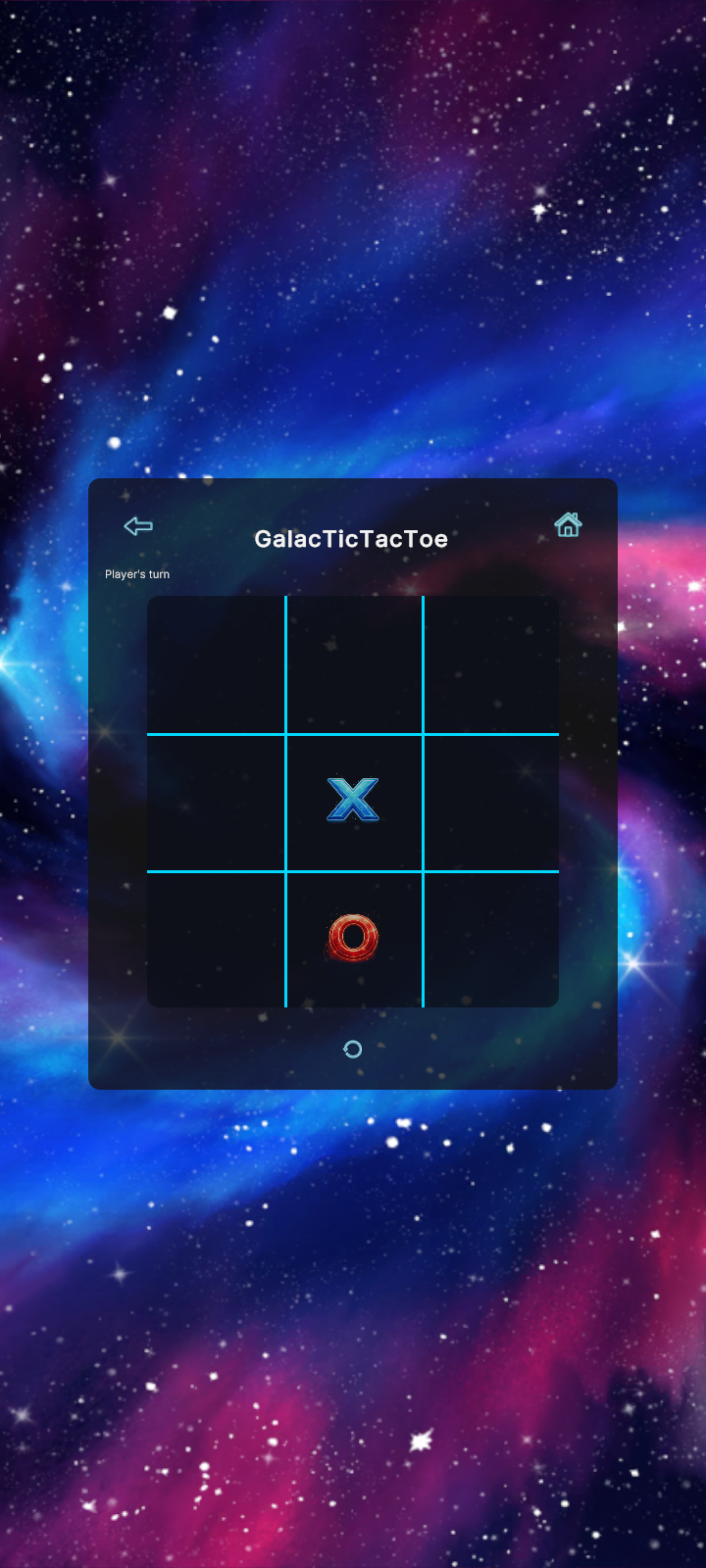
Menus, buttons, and board presentation were designed to remain readable across different screen sizes.
Clear Match Feedback
Win states, draws, and replay actions were presented clearly to complete the experience loop.
Technical Breakdown
GalacTicTacToe was built with a strong emphasis on separation between presentation, game state, and user flow. Even though the game itself is simple to understand, the project was treated as an opportunity to build and refine good development habits.
UI Toolkit workflow
The interface was created using Unity UI Toolkit, allowing for more structured layout control and cleaner visual iteration than a quick throwaway UI setup.
Game flow structure
The project includes clear scene flow from main menu to mode selection, difficulty selection, active gameplay, and end-state feedback.
AI decision-making
AI behaviour was built around difficulty-based logic so the project could support more than one style of solo play.
Cross-platform support
The game was developed with both mobile and browser presentation in mind, requiring attention to scaling, readability, and usability.
Challenges and Solutions
Challenge: keeping the UI readable on different devices
A polished interface on desktop does not automatically translate well to mobile. Layout and spacing had to be adjusted carefully to keep the screens readable and balanced.
Solution: responsive layout and testing
The project was iterated through device testing and UI refinement, with a focus on keeping controls visible, readable, and consistent.
Challenge: making a simple concept feel presentable
Tic-tac-toe is easy to understand, but that also makes it easier for the project to feel too plain or forgettable.
Solution: strong visual identity and cleaner flow
Presentation, colour, layout structure, and screen transitions were used to give the project more personality and a stronger sense of completion.
What I Learned
This project reinforced how much value comes from polish, iteration, and structure. Even a mechanically simple game becomes far more effective when the UI is readable, the flow is deliberate, and the final presentation feels complete.
It also gave me a stronger workflow for building projects that are not only playable, but also suitable for portfolio presentation, cross-platform deployment, and future expansion.
Gallery
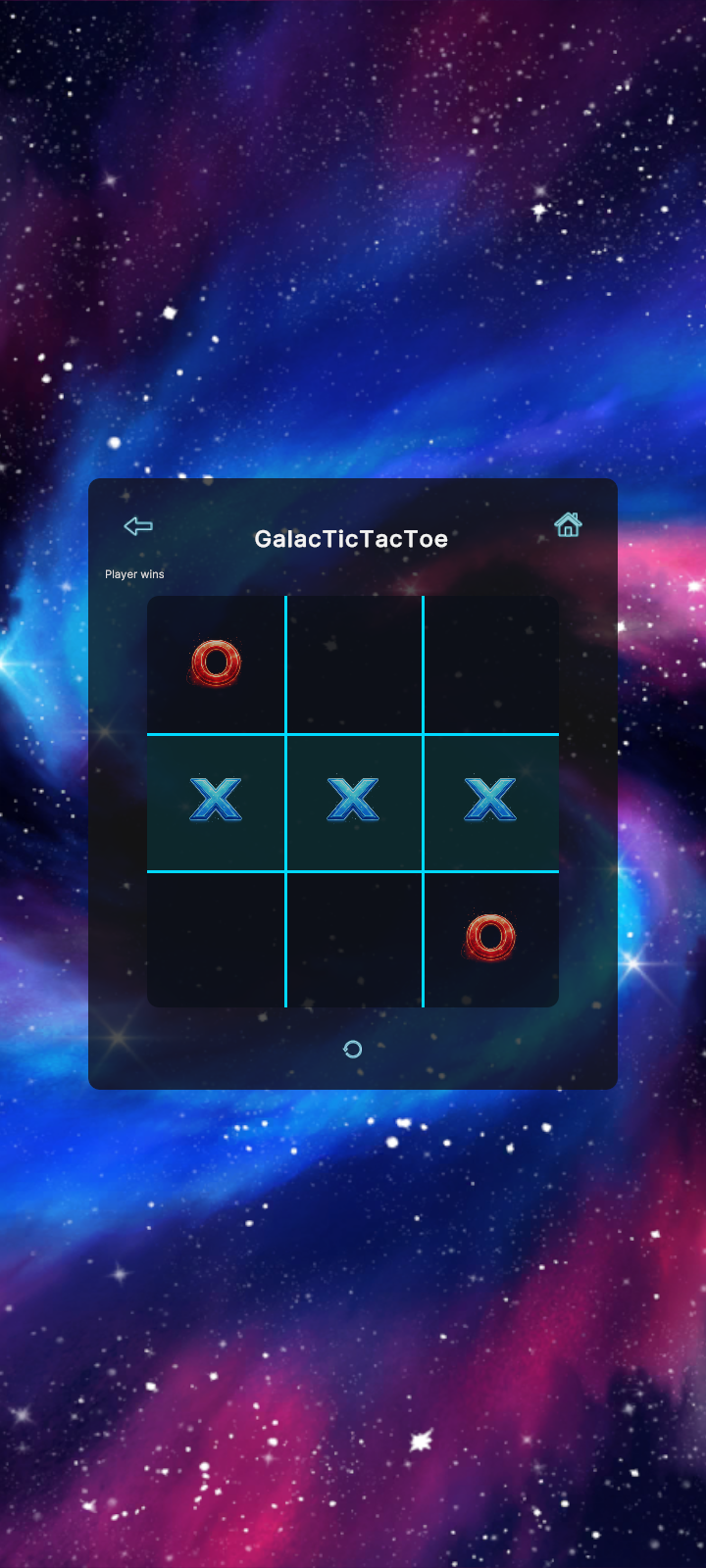
Final Outcome
GalacTicTacToe became a stronger project than a standard small-scale game prototype because it was approached as both a playable build and a presentation piece. It demonstrates gameplay development, UI thinking, iteration, and the ability to take a small concept and deliver it with more clarity and polish.